
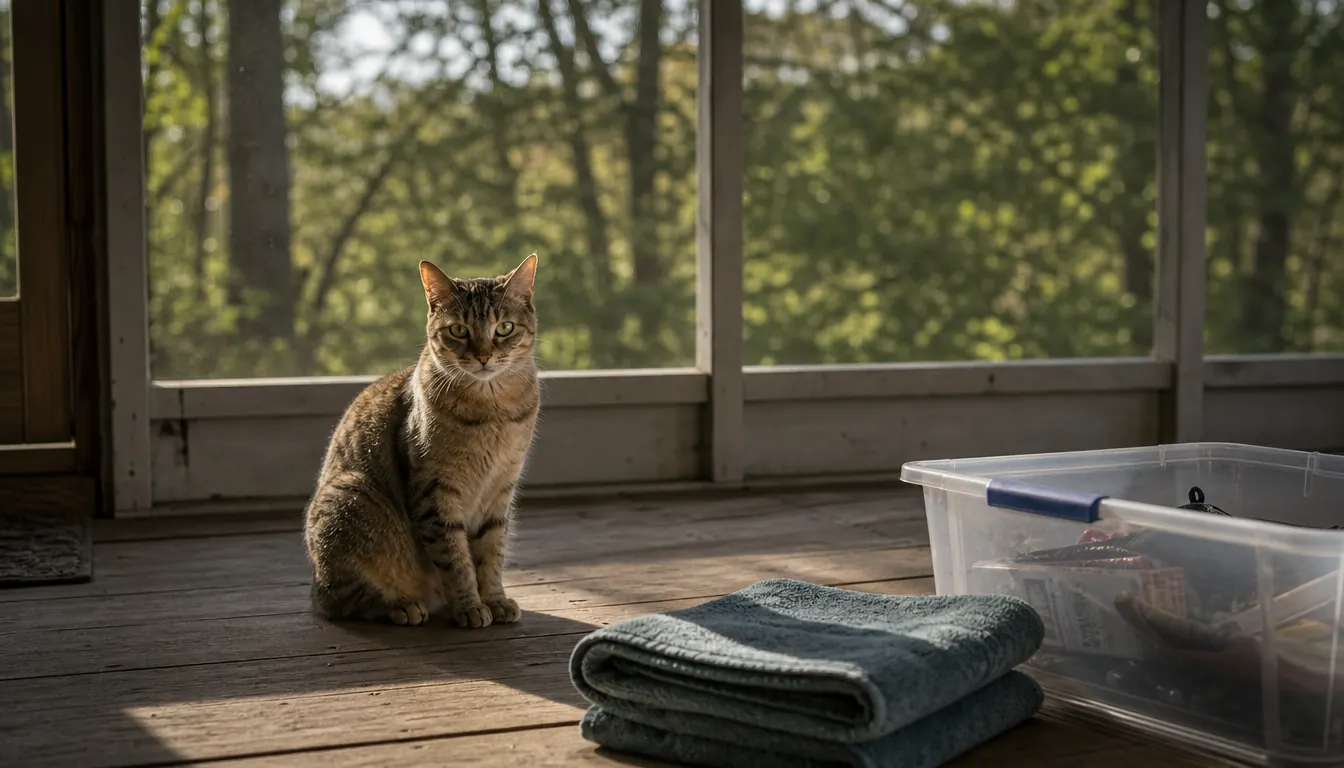
Junebug is a three-year-old calico I pulled out of a shelter cage in spring 2024, and by her first full summer she had turned my couch, my husband Gary's work shirts and our bed into one long sheet of cat hair. I already had a slicker brush from the grocery store, the kind with the wire pins, and it mostly rearranged the fur instead of lifting it. In June 2025 I ordered the FURminator deShedding tool for short-haired cats, medium to large size, and I have used it two or three afternoons a week for seventeen months now. That is the whole backstory. What follows is what I actually saw in a two-bedroom house in Hickory, North Carolina, with four cats in it, and the parts of this tool that still annoy me.
Here is the short version before the long one. The FURminator takes more loose hair off Junebug in five minutes than the slicker brush did in fifteen, and there is noticeably less hair on the couch and on Gary's shirts. It is also easy to overdo, Junebug will only tolerate it in short stretches, and it does nothing for a cat who will not hold still for any brush at all. Four and a half stars, not five, and the missing half is entirely about the overdoing.
The Quick Verdict
Takes more loose hair off my heaviest shedder in five minutes than my old slicker brush did in fifteen, as long as I stop before the cat says stop.
Amazon Check Today's Price →The brush that emptied my couch, not just my patience
Medium to large size, built for short-haired cats. Check the listing for today's price and read the sizing note before you order, because the size matters more than anything else here.
Amazon Check Today's Price on Amazon →How I've Used It
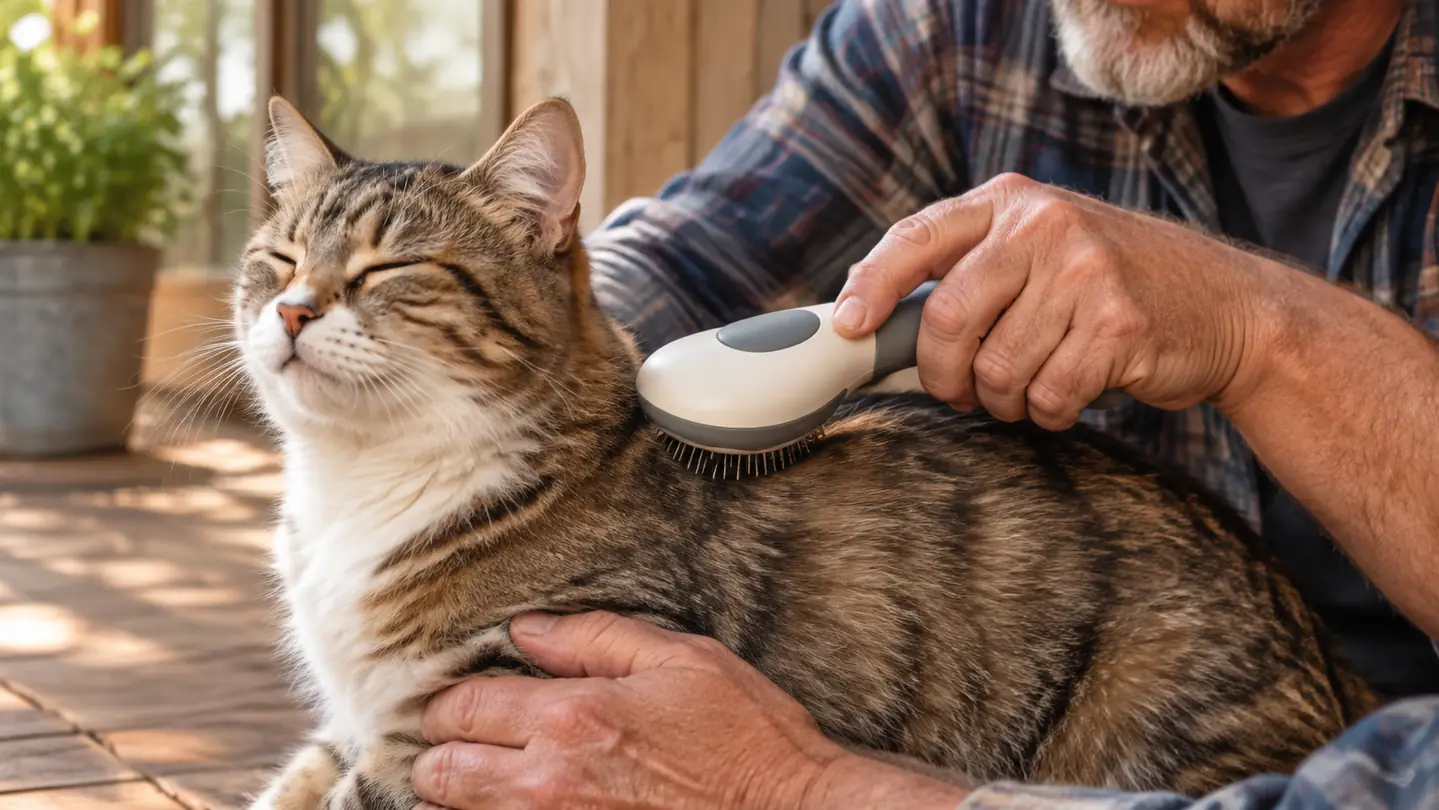
Junebug gets brushed on the screened back porch, two or three afternoons a week, usually around three o'clock when I am home from the store and the light is still good. Sessions run five to ten minutes. I start at her shoulders and work back toward her tail in light strokes in the direction the hair grows, the same way you would pet her. When the skin along her back starts to ripple, I stop. That ripple is the only warning I get, and it took me about a month to learn to take it the first time.
Biscuit, my twelve-year-old orange tabby, gets a session about once a week. He is roughly fourteen pounds and a short-haired cat too, so the same tool works on him, and he sits through it far better than Junebug because he is too busy watching the birds through the screen to care. Pepper does not get brushed with it at all. She is a black cat with a coat that does not shed heavily, and she sees no reason to participate in any of this.
I never use it on Mabel. She is fifteen, about eight pounds, and her coat has thinned out as she has gotten older. Dr. Patel, our vet here in Hickory, called her stiffness normal aging and told me to keep her comfortable. A tool with a metal edge is not something I am willing to run over an older cat's skin, so Mabel gets the soft slicker brush in slow passes and nothing else. That is my call and not a rule from anybody, but it is the one thing in this review I would most want another owner to think about before they start.
The tool lives in the plastic bin in the laundry room with the slicker brush and the nail clippers. It is about the size of a large comb, so it does not crowd anything out.
What the Tool Actually Is
The listing describes this as a deShedding tool for short-haired cats, medium to large, with a stainless steel deShedding edge and a curved edge that is meant to glide over the skin instead of digging in at the corners. The handle is plastic or rubber, the overall shape is oblong, and it weighs 5.44 ounces. It measures 2 inches by 5 inches by 8.75 inches. That is the entire hardware story. No motor, no battery, nothing to charge, and nothing to break except the edge itself.
The curve is the part that matters, and it is the part I did not understand until I had it in my hand. A flat blade catches on the shoulder blades and under the front legs. This one rolls over those spots because the edge follows the shape of the animal rather than fighting it. On Junebug's back, where she is broad and flat, it glides. Under her front leg, where the skin is thin and folds, I still go slow and use the last inch of the edge and nothing more.
The listing says to choose the large size for cats over ten pounds, and I would take that seriously rather than guess. Junebug is about ten pounds and Biscuit is about fourteen, and on Biscuit the tool covers more of his back in one stroke, which means fewer strokes and a shorter session. If you have a small cat under ten pounds, the sizing guidance on the page points you another way, and I would follow it rather than buy this one and fight it twice a week.
For what it is worth, the tool carries a 4.7 average across roughly 4,100 ratings on Amazon as I write this. I do not put much weight on that number by itself. I put weight on the fact that I have used mine two or three times a week for seventeen months and the edge is still doing exactly what it did in June 2025.
What Seventeen Months of Brushing Did and Did Not Do
What it did: it took off a lot of hair. That sounds like a low bar until you have brushed a shedding cat with a tool that never reaches the undercoat. The slicker brush lifted the surface hair and left the pale fluff underneath, which then migrated to the couch anyway. The FURminator reaches through the topcoat and pulls out that loose undercoat, and the amount that comes off in a single five-minute session on Junebug still surprises me seventeen months in.
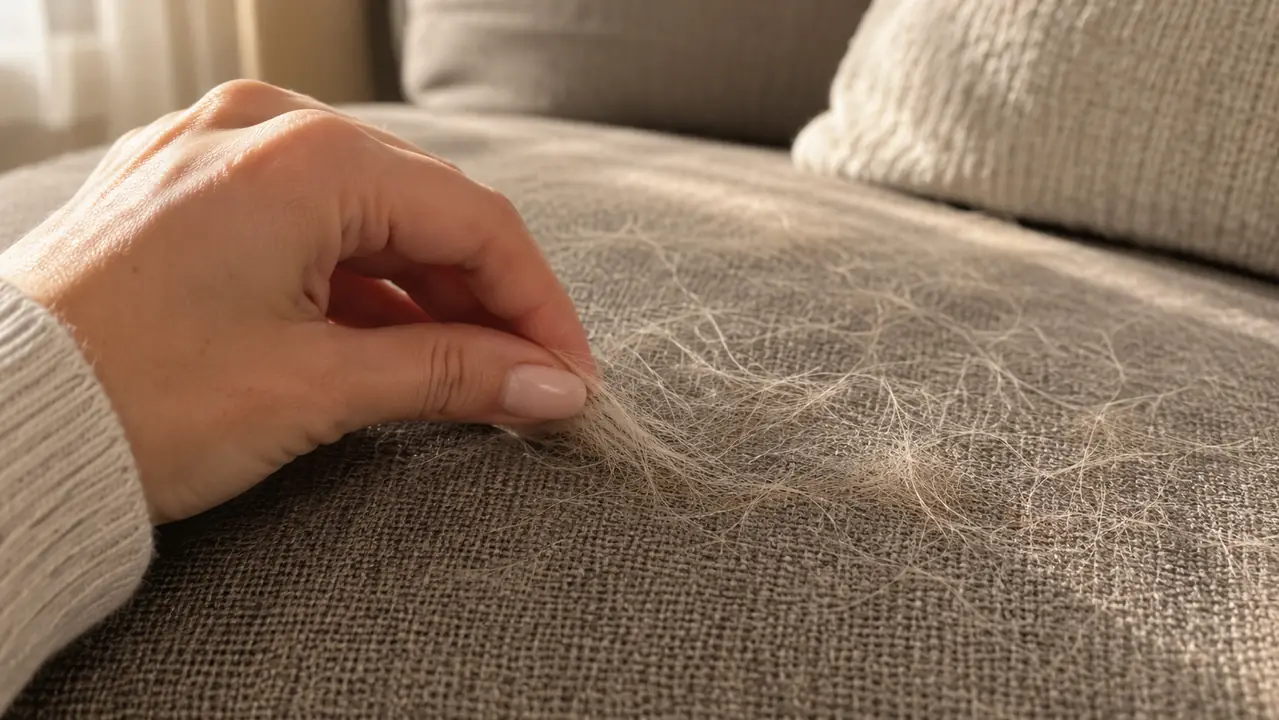
The difference I can actually measure at home is on the couch and on Gary's work shirts. Before June 2025 I ran a lint roller over the couch cushions most evenings. Now I do it maybe once a week, and some weeks not at all. Nobody is going to mistake our house for a house without cats. There is less fur on the furniture, that is the honest claim, not none.
What it did not do: it did not stop Junebug from shedding. She is a cat, she has a coat, and summer still means fur in the corners of the kitchen. It did not make her love being brushed either, though she now walks onto the porch and sits down when I pick the tool up, which is closer to enthusiasm than she shows for anything else. And it changed nothing about her health, her eating or her behavior. It is a grooming tool. If your cat's coat changes suddenly, or your cat starts over-grooming or leaving bald patches, that is a call to your vet, not a reason to buy a brush.
The Part Nobody Warns You About: Overbrushing
The first month, I overdid it. I was so pleased with how much hair came off that I kept going, and one afternoon Junebug's back was pink along one side where I had gone over the same strip too many times. Nothing dramatic, and it settled down in a day, but I felt terrible about it and I changed how I work.
Now the rule in this house is short sessions and no repeat passes. Five to ten minutes, one pass over each area, and when the tool comes away clean I stop even if the clock says there is time left. The curved edge helps here because it does not dig in, but a curved edge on the same square inch for two minutes is still too much for a cat's skin.
I also learned to watch the cat instead of the clock. Junebug's tail starts to flick, then the skin along her back ripples, then she stands up and leaves. If I stop at the tail flick we are both fine. If I wait for the stand-up, she is gone and I do not see her for an hour. That is not the tool's fault, it is mine for not listening, but it is worth knowing before you buy, because this tool makes it very easy to keep going. Hair keeps coming off, so you keep brushing. That is the trap, and it is the only real complaint I have after seventeen months.
How It Compares to the Slicker Brush I Already Had
The slicker brush is still in the laundry room bin. It came from the grocery store and it has exactly one job now, which is gentle brushing on Mabel, whose older skin and thinner coat do not need a metal edge anywhere near them. For Junebug and Biscuit there is no comparison at all. The slicker moves hair around the coat. The FURminator removes it. I wrote a longer side-by-side on those two if you want the detail, and it comes down to the same sentence: the slicker is for tidying the surface and the deShedding tool is for the undercoat.
The one place the slicker wins is tolerance. Junebug will let me use the slicker anywhere on her body. She will only let me use the FURminator on her back and her sides. That is not a small thing. If your cat will sit still for two minutes and no more, a tool that needs five is not going to get used, and it will sit in your bin next to the brush you already own.
I also want to be honest about the hair that ends up in the air. The tool gathers the loose hair along its edge and you lift it off with your fingers. If you have a cat who shakes mid-session, some of that clump lands on the floor. I brush on the porch for exactly that reason, and now I sweep the porch once a week instead of sweeping the living room every day.
Size, Coat Type, and Who It Is Actually Built For
This is the short hair version and that matters more than anything else on the page. The listing is specific about it, and the edge is built for a coat that lies close to the body. If you have a long-haired cat, this is not the tool the listing points you toward. I have never brushed a long-haired cat with it, so I cannot tell you what happens, and I would rather say that plainly than guess at it.
The medium to large size is the one the listing points you toward for a cat over ten pounds, and Biscuit at fourteen pounds is exactly who it was sized for. On a small cat it is going to feel like a lot of tool in your hand, and a cat who is finished early is a cat who will not sit for it again next week. Match the size to the cat. That single decision matters more than anything I can tell you about the edge.
What I Liked
- Pulls out loose undercoat a slicker brush leaves behind, and you can see it in the first five minutes
- Curved stainless steel edge glides over the back and shoulders instead of digging in at the corners
- Light enough at 5.44 ounces to hold through a full session without my wrist complaining
- Seventeen months of twice-weekly use and the edge still works the way it did on day one
- Noticeably less hair on the couch and on Gary's work shirts
Where It Falls Short
- Very easy to overbrush. I made Junebug's back pink in the first month
- Junebug tolerates it on her back and sides only, never her belly or legs
- It is the short hair version. It is not built for a long coat
- You lift the collected hair off the edge with your fingers and some of it ends up on the floor
- Does nothing for a cat who will not sit still for any brush at all
Before June 2025 I ran a lint roller over the couch cushions most evenings. Now I do it maybe once a week, and some weeks not at all.
Who This Is For
This is for the owner of a short-haired cat who is tired of finding fur on the furniture and has already tried a slicker brush and come away unimpressed. It is for a cat who will sit for five minutes on a porch or a kitchen floor and let you work along her back. It is for a household with a bigger cat, over ten pounds, because that is the size this one is built for. If that describes your house, the difference between this and a grocery store brush is obvious the first time you use it.
It is also for someone willing to stop early. The people who get burned by this tool are the ones who keep going because hair keeps coming off. If you can set a five-minute limit and actually hold to it, you get the good part without the part where your cat avoids you for an afternoon.
Who Should Skip It
Skip it if your cat is long-haired. The listing says short hair and I believe it. Skip it if your cat will not tolerate brushing at all, because a tool does not teach a cat to accept handling. Skip it if you have a senior cat with a thin or fragile coat, the way I have Mabel, and use the soft brush instead. And skip it if you are looking for something that stops shedding. Nothing stops shedding. This reduces how much of it lands on your couch.
One more thing, and I mean this. If your cat has bald patches, scabs, itchy skin or a coat that has changed suddenly, put the tool down and call your vet. I am not a veterinarian, a vet tech or a groomer. I am a woman who works the early shift at a convenience store and brushes her cats on the porch in the afternoon. Anything past grooming is a question for Dr. Patel, not for me.
If your short-haired cat is winning the fur war, start here
Medium to large, for cats over ten pounds with a short coat. Five minutes, one pass per area, and stop when the cat says stop. Check the listing for the current price and the sizing guidance first.
Amazon Check Today's Price on Amazon →