
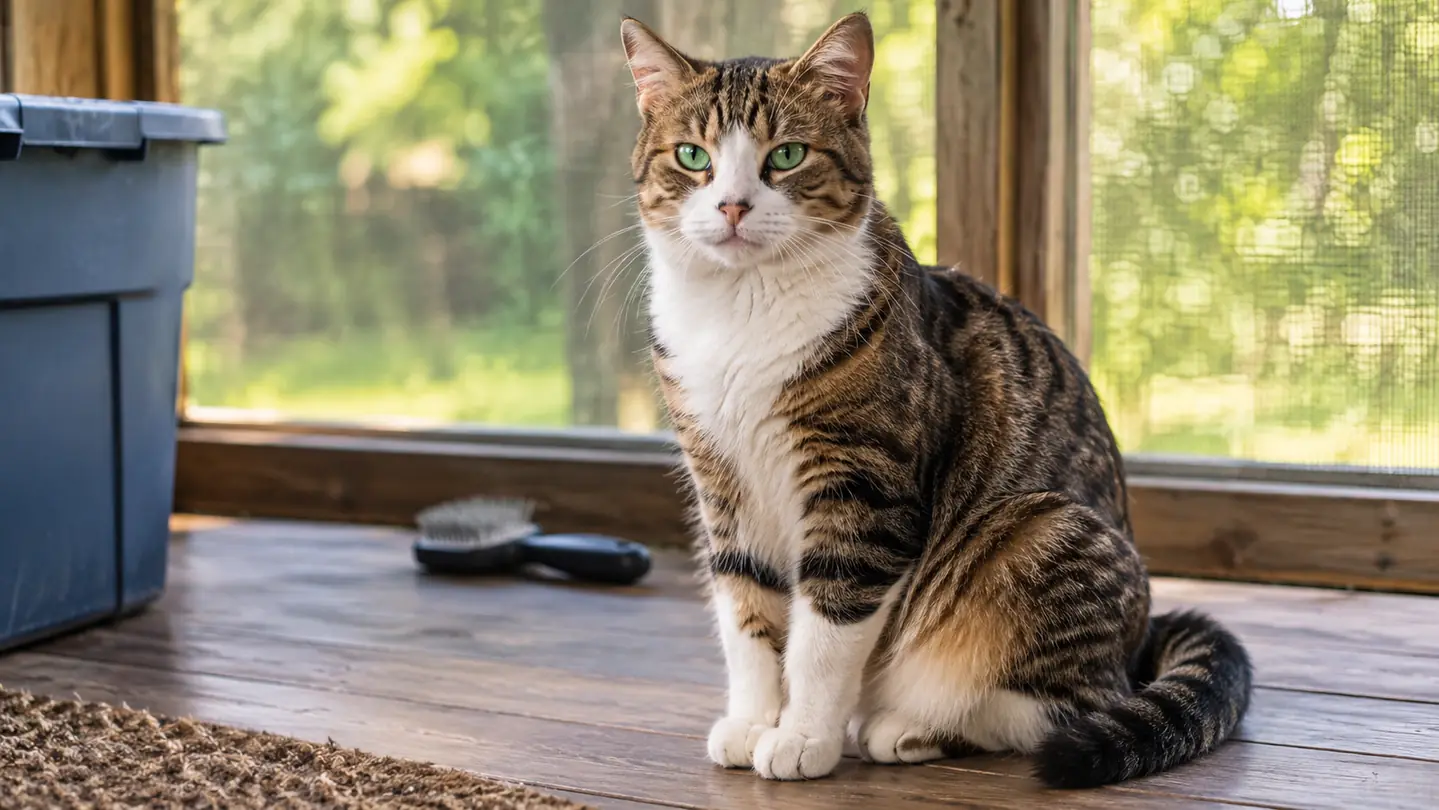
The short answer, for a short-haired cat whose hair ends up on the couch, on Gary's work shirts and on the bed: the FURminator is the tool that pulls the loose coat out, and a slicker brush is the tool I pick up when a cat needs something gentle. Both of mine live in the same plastic bin in my laundry room. Only one of them gets used two or three afternoons a week, and it is the FURminator.
I am Lorraine Whitaker, I am 56, I work the early shift at a gas station convenience store in Hickory, North Carolina, and I have four indoor cats. Biscuit is 12, Pepper is 9, Mabel is 15 and Junebug is 3. I am not a groomer and I am not a vet tech, and I am not going to pretend to be either one. What follows is what I saw in my own house with my own hands, plus what the product listing actually says, because I read those things before I spend my own money on anything.
Why There Are Two Brushes in the Bin
Before June 2025 there was exactly one brush in this house. An unnamed slicker brush I picked up at the grocery store, the kind with fine wire pins set into a cushioned back. It did what a slicker brush does. It smoothed the top of a coat and lifted a little surface hair, and not one of my four cats ever objected to it. For years that seemed like enough.
Then Junebug had her first full summer with us. She came from the shelter in spring 2024, and by June 2025 she was leaving hair on the couch, on Gary's work shirts and on the bed. The slicker brush was not making a dent in it. I could brush her for ten minutes and still come away with a hand covered in hair off the couch an hour later. So I ordered the FURminator, medium to large for short hair, and it came in June 2025. I have used it for 17 months now, and the slicker brush is still in the bin.
That is the honest picture. One is not a better product than the other. They are two different jobs, and the confusion comes from both of them being called brushes when only one of them is really a brush.
The Short Answer
A slicker brush is a finishing tool. The FURminator is a removal tool. If your cat has a short coat and the hair is landing on your furniture, the removal tool is the one that changes what you find on the couch on a Wednesday. If your cat is old, thin coated or twitchy about being handled, the slicker brush is the kinder of the two, and no amount of hair removal is worth a cat that runs when she sees your hand coming.
| FURminator deShedding Tool | Slicker Brush | |
|---|---|---|
| What it pulls out | Reaches through the topcoat and lifts loose hair and undercoat on a short coat | Smooths the surface and picks up a little of what is already sitting loose |
| Coat type it suits | Short hair only, and the listing says to choose the large size for cats over 10 pounds | Any coat length, including the thin coat on an older cat |
| Pressure on the skin | Curved edge is built to glide over the skin and keep the corners from digging in, but it is still a metal edge | Soft pins bend and give, so pressing too hard is hard to do by accident |
| Hair per session | A visible clump in five minutes on a shedding cat | Barely anything, but the cat stays relaxed the whole time |
| Legs, tail and cheeks | Not the tool for those spots at my house | Fine enough for legs, tail and the fur on the cheeks |
| How long the cat allows | Five to ten minutes, then she is done with me | Longer, because it feels closer to being petted |
| Cleaning it out | Hair gathers at the edge and comes off in one piece between strokes | Hair mats in the pins and needs pulling out with the fingers |
| Where it lives now | Laundry room bin, out two or three afternoons a week | Same bin, out for one old cat and the touch ups |
| Best for | Short-haired shedders over 10 pounds | Older, thinner-coated cats and detail work |
Where FURminator Wins
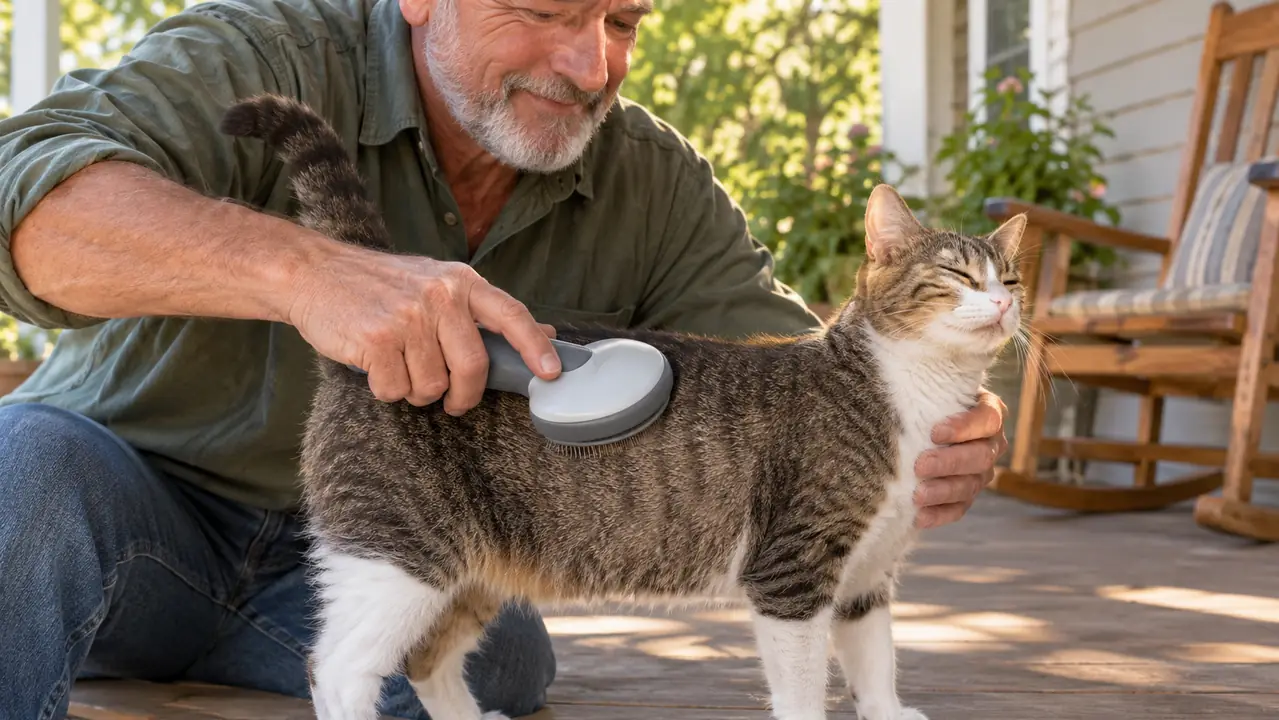
Volume, first and plainest. The listing says the stainless steel deShedding edge reaches through the topcoat and removes loose hair and undercoat, and that is what it looks like from my side of the porch. Five minutes on Junebug and I have a clump of hair that would have taken me a week to collect with the slicker brush. That is the entire reason I bought it and the entire reason it stayed. I did not need it to do anything else.
Second, the edge itself. The listing says the curved edge glides over the skin and keeps the corners from digging in at the edges, and that it conforms to the cat's shape. It is oblong, 8.75 inches long and 5.44 ounces in the hand, which is light enough that my wrist does not complain halfway through. The listing also says to choose the large size for cats over 10 pounds, which covers Junebug at about 10 pounds and Biscuit at about 14. I do not have to know what I am doing to use it. I hold it flat and I stroke.
Third, what it does for the house. There is less hair on the couch and less on Gary's shirts. Junebug still sheds, because she is a cat and that is what cats do, and I am not going to tell you a brush changes that. But what I am cleaning up on a Wednesday is not what I was cleaning up in the summer of 2025, and I noticed the difference within the first month.
Where the Slicker Brush Wins
Mabel. That is the whole answer for me. Mabel is 15, about 8 pounds, her coat has thinned out and her skin is older. I will not run a metal deShedding edge over her. The slicker brush, used light, is what she gets, and she will stand for it. On a small cat with a fine coat, gentle beats effective every single time, and I would say that to anyone standing in a laundry room holding two brushes and trying to choose.
Second, detail work. The slicker brush gets in at the legs, the tail and the cheek fur, places where a deShedding edge sized for a cat over 10 pounds does not belong. And the slicker is forgiving. If you press too hard the cat tells you right away and the worst outcome is a cat that walks off. A deShedding edge used too hard or too long is a different kind of mistake, which is why I stop at the first twitch instead of pushing through for one more pass.
If your short-haired cat is the one leaving hair on the couch, this is the tool that fixed that at my house.
Medium to large for short hair, the size the listing recommends for cats over 10 pounds. I have used mine since June 2025, two or three afternoons a week, five to ten minutes a session.
Amazon Check Today's Price on Amazon →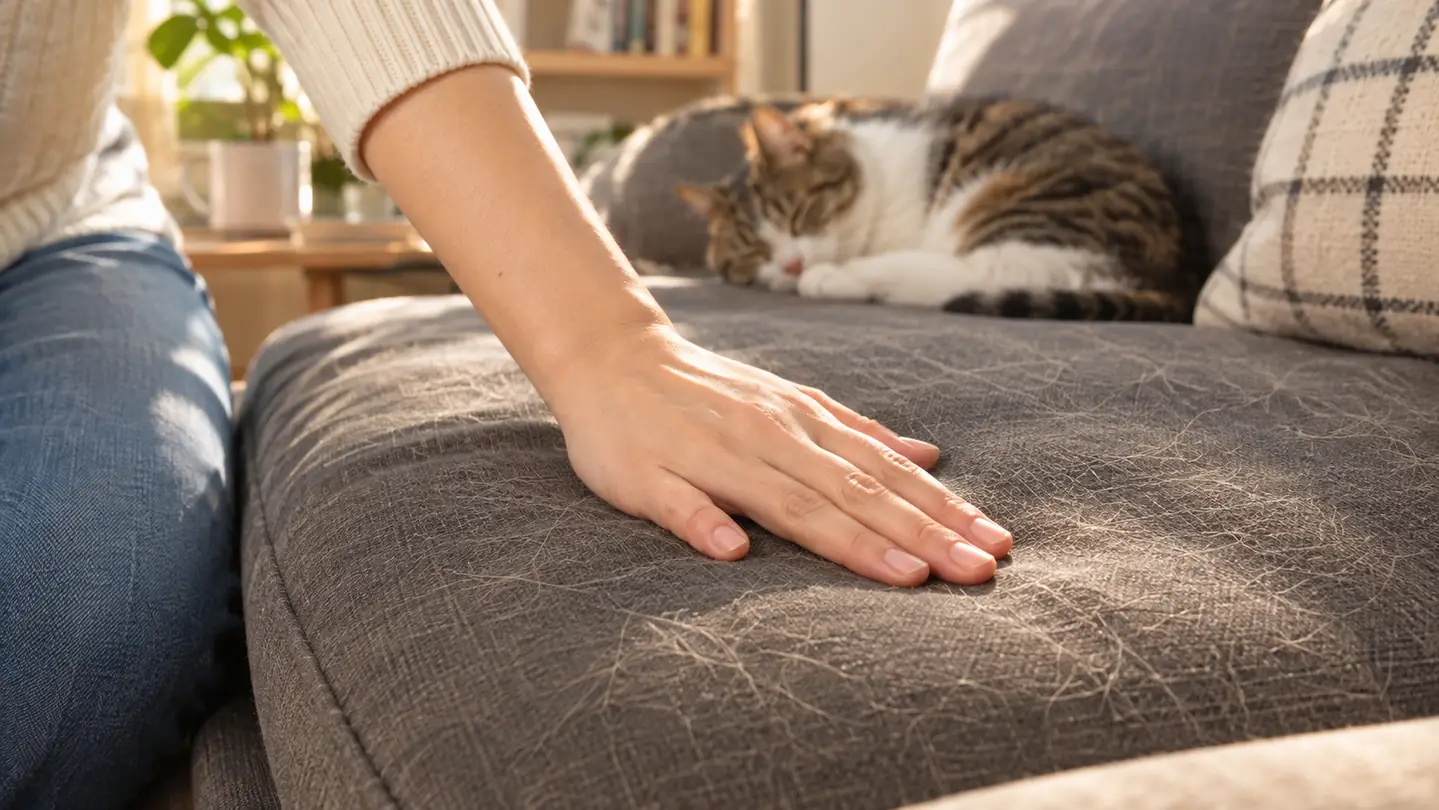
What the Listing Says, and What It Does Not
The listing is short and straightforward about what the tool is. Stainless steel deShedding edge, a curved edge so the corners do not dig in, short hair only, oblong handle, 2 by 5 by 8.75 inches, 5.44 ounces, and the note about picking the large size for cats over 10 pounds. It lists detangling as a feature and says it is designed for comfortable, easy grooming. That is the whole thing. It is a handle with an edge on the end of it, and that is all it needs to be.
What the listing does not tell you is how hard to press, how long to keep going, or how your particular cat will take it. I had to learn that on the porch. Five to ten minutes, light strokes in the direction the hair grows, stop when she starts to twitch. None of that is printed on the package, and I would guess it is a little different for every cat in every house.
One more thing worth saying plainly. A brush is not a diagnosis. If your cat's coat changes suddenly, if she stops grooming herself, or if she is eating, drinking or using the litter box differently, that is a call to your vet. Dr. Patel sees my four once a year and I ask her about anything that changes between visits. No grooming tool settles that kind of question, and I would not want anyone reading this to think it does.
How I Use It Without Overdoing It
I do this on the screened porch, in the afternoon when I get home around 2:00. Junebug is calmer out there and the hair is easier to sweep up off the boards than off a rug. I lay the edge flat against her back instead of at an angle, and I go with the grain of the coat, short strokes, the same direction her hair already lies. The listing mentions the curved edge gliding over the skin instead of digging in, and keeping it flat is how I make that true at my house.
The stopping signals are the part nobody tells you. For Junebug it starts with a twitch along her back, then the tail. If I keep going past that she walks off and I have lost the session and a little of her trust. So five to ten minutes is my ceiling, not my goal. On Biscuit, who is 12 and a bit heavy and slower to move, one session a week is plenty and he mostly lies there and lets me.
Between strokes the hair gathers at the edge and comes off in one piece when I pinch it, which is quick and means I am not fighting the tool the whole time. When I am done it goes back in the plastic bin in the laundry room with the slicker brush, the nail clippers and the lint roller. It is not a decorative object and it does not need to be out on a shelf.
What Seventeen Months Actually Looked Like
Junebug gets the FURminator two or three afternoons a week, five to ten minutes on the porch, and that is the whole routine. Pepper is about 9 pounds, under the listing's 10 pound line, so I have not used it on her at all. She has her own situation with water and she gets my attention elsewhere. Mabel gets the slicker brush and nothing else. That leaves one cat on the deShedding tool and one on the slicker, which tells you more about how I use these than any table can.
The difference I can actually state is this. Far more loose hair comes out with the FURminator than with the slicker brush, and there is less hair on the furniture and on Gary's shirts. The difference I cannot state is that it stops shedding, or that it does anything at all for a cat's health. It does not. It is a grooming tool and it does a grooming job, and I would rather say that plainly than oversell a piece of metal with a handle on it.
Ten minutes with the slicker brush and I could still fill my hand with hair off the couch an hour later. Five minutes with the FURminator and the couch stayed clean until Thursday.
Who Should Buy Which
Buy the FURminator if your cat has a short coat, weighs more than 10 pounds, and leaves hair on things you sit on. Buy it if your cat will stand still for five minutes and you are willing to stop when she tells you to. Follow the listing's own sizing note, large for cats over 10 pounds, and short hair only. It is a tool built for one specific job and it does that job well, which is more than I can say for half of what is in my laundry room bin.
Keep a slicker brush for the old cat with the thin coat, for a kitten, for the legs and the tail and the in-between touch ups. Mine is still in the bin and I still use it on Mabel most weeks. If you have one short-haired cat and one older one, a deShedding tool plus a plain slicker brush is not a waste of shelf space. That pair is exactly what I would buy again, and it is what I would tell a friend at work to buy if she asked me in the break room.
Two brushes, one bin, and one of them earns its spot two or three afternoons a week.
The FURminator medium to large for short hair is the one I would replace tomorrow if mine went missing. If your cat is under 10 pounds or has a thin older coat, keep the slicker brush in the rotation instead.
Amazon See the FURminator listing on Amazon →